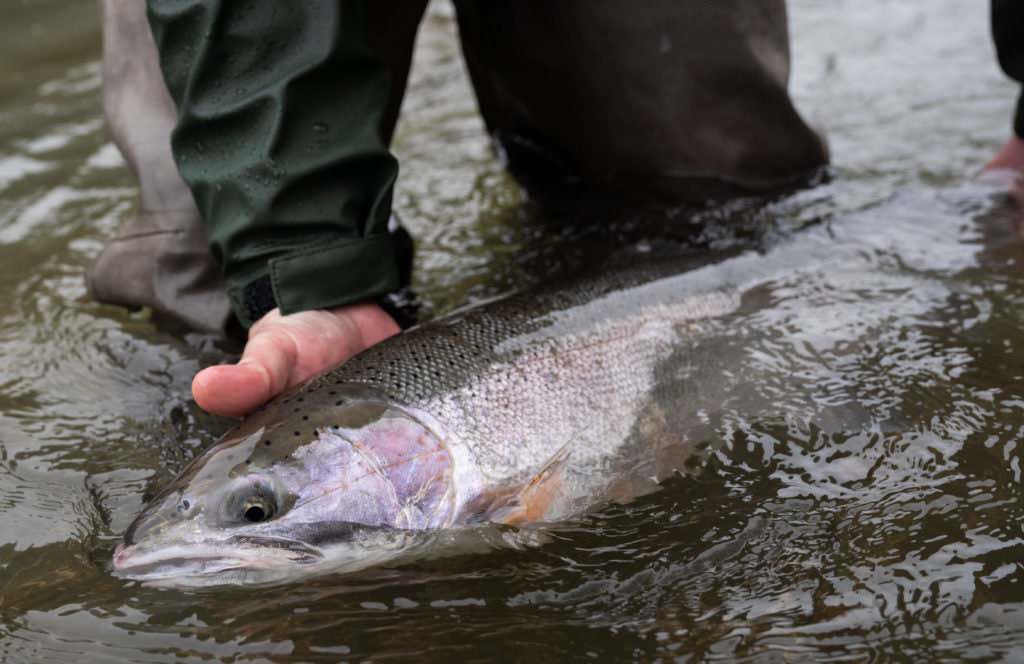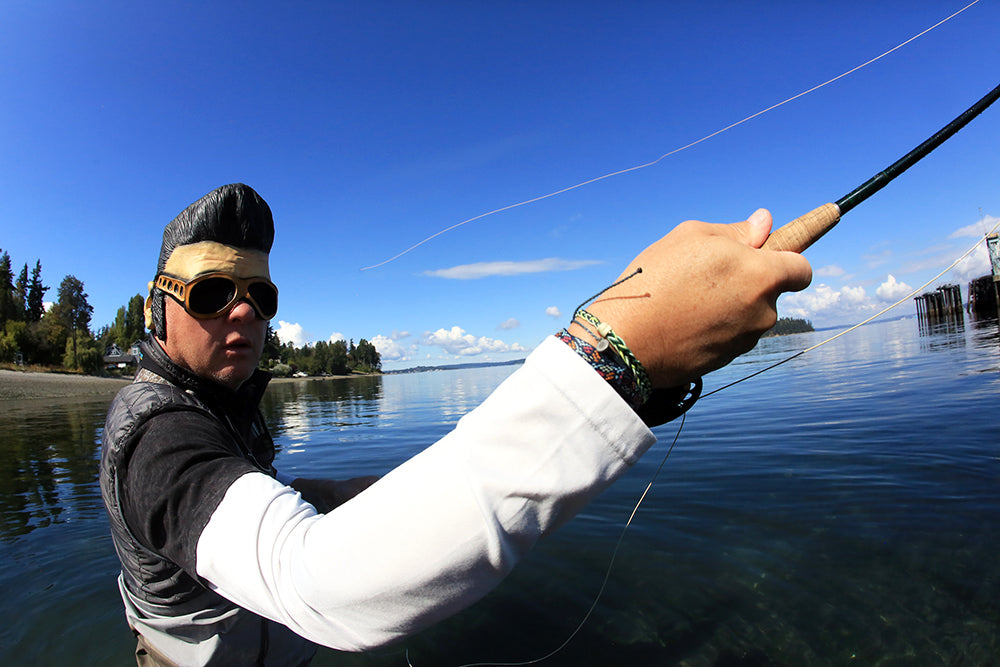

Posts Tagged ‘Puget Sound’

Urban Fly-Fish Guiding

Tuesday, August 10th, 2010

My wife works for a big financial firm and when we go to holiday events with her co-workers, I dress up and look every bit a part of their regular social and work environments. Nearly anyway, minus the sandals, cracked and smelly feet, dirt under my finger and toe nails and gash on my face from latest spey cast gone askew with 2/0 hook.

As we begin to have a few drinks and gather around to chat, the obvious and inevitable question comes up, “What do you do for work?” The reaction to what comes from my mouth ranges about as far as you can imagine.

“That is AWESOME!”

“What is fly fishing?”

“No, I mean now, not what you did in Colorado.”

“Can you do that here?!!” “Can you stay busy and make any money?”

“What would you guide for here, there aren’t any trout streams are there?”

“Do you have a card?”

“Have you seen ‘A River Runs Around It?” No, I haven’t!

“So is that just on the weekends?”

“I thought they only fly fished in Montana?!!!”

“You must eat a lot of fish!”

“How do you keep the insects on the line when casting?”

“I fly fished once, in Montana, 20 years ago….” or “I have fly fished for 20 years, a day a year anyway.”

“Where do you take people? ‘We go everywhere, Puget Sound is one of our favorites.’ You can fly fish in saltwater!!?? What lives out there?”

I think you get the point, not a job those in the 7th largest city in the U.S. can really even concieve of having. And to be totally honest, sometimes I wonder why or how in the hell I came to do this. There is so little that is similar about this to what I did in Colorado and other Rocky Mountain states with one exception, every direction you look there is water beckoning to be fished, maybe more so here and there in lies the start of the problem. There, in the Rockies, it was EASY in nearly every way. Here it is a bitch in nearly every way, allow me to point out how.

1. Guiding in the Rockies meant having to bascially only know trout, that is it. Maybe a few different rivers, launch points and a little navigation and real rowing in a few select locations.

2. Longest drive I ever had was about 40 minutes from the shop to the river for a day trip.

2a. No traffic, not the stand still on 4 lane freeways we have here anyway.

3. Meet at a luxurious 7-8 am usually at the shop.

4. Back from a full day by about 6pm at the latest.

5. In the bar drinking again by 7 at the latest.

5a. Could leave car at fly shop over night and just walk down in the morning to meet next day’s clients.

6. If drove after drinking, knew town marshall by first name and typically had a few drinks with him the night before in the same bar.

7. Went to bed each night KNOWING we were catching fish the next day.

7a. Most likely big fish too!

8. Sleep well knowing the above!

Here in Seattle anyway, we need to know a bit more. There are way too many great fly angling opps in our area to pass up by simply guiding one river. Besides that, when your home river is blown out (or closed!!), which happens here frequently, how do you pay the mortgage? So here are a few of the things we as guides in this urban world need to be great at in order to be successful:

Pre 1. Washington did not win the big resident trout mega lottery, we have a ton of small fish, it is why Sage makes the 000wt.

1. Which way traffic is worst and at what times and how that coincides with where we want to take clients.

2. Must be proficient in all facets of local saltwater, spey casting and anadromous fish, mostly steelhead, resident trout in more than a handful of streams and creeks, tailwaters, freestone and spring creeks. All entomology associated with each, deep familiarization with all equipment coming out that is applicable to each.

2a. Did we mention Pike, Muskee, Bass and Carp? All are here and just waiting to be guided on a fly rod.

3. In the steelhead world, know all launch points on a dozen rivers, which ones fish at what time of year and at what flow.

4. Saltwater, must know at least 30 different beaches to begin to be successful all year in all weather conditions. Knowing which beaches are out of wind, which ones are blown out due to nearby creek flowing in and each of these 30, at least, at every tide level from -4 to +11.

5. In the trout world around here you can live like many by the whims of the Yakima River, one of our only trout managed rivers in the state and certianly the most well known. The Yak still has a dozen float options on it to know well. Wild rainbows here are very fickle so you better know your bugs or it will be a slow one!

5a. Guiding creeks, know at least 20 different ones within 2 hours of Seattle. All access points, options for when someone is there when you arrive.

5b. The what to do when someone is there I have to laugh at because while in destination fisheries, you have more people focused on fishing while there but it will never compare to having nearly 3 million, or more, within 2 hours and 1-2 percent of them focused on fishing. Most of them NOT fly anglers either so not only do you have nothing in common with them, they hate you much of the time. 1 for guiding but secondly for fly fishing. When was the last time you had a person walk over to you with a rock in their hand and say, “You need to get the hell out of here, this isn’t a fly fishing river, go somewhere else, NOW!”

6. The nitty gritty. The 3 things you NEVER talk about with clients — Religion, Money and Politics. Well, here you better be capable of it because most are going to bring it up at some point in the 4 hours you spend in the car with them that day. Yes, 4 hours sometimes of window time, not 15 minutes where you barely even get names of each other before you are on the water.

7. The tough shit. Get ready for months of swallowing your pride as you come up with reasons as to why your clients didn’t catch fish in either the salt or one of the dozen steelhead rivers in the area. This happens often in both so good night sleep the night before only happens with some help from alcohol or Tylenol PM, both if you are winter steelheading.

7a. Winter steelheading from Seattle, you either head north, south or west and that can change on a days notice. Up at 3am, get client by 3:30-4am, be on water by 6:30am with shuttle done, stand beside them in 35 degree water, in leaky waders with sleet or sheets of rain at least coming at you, always head on too. Then the long car ride back either sneaking sips of whisky from a flask between oncoming headlights that look like a cops or speeding excessively to get back and end the horribly uncomfortable silence…

7b. Wondering why you are the only boat on a stretch of river where there should be 30. It is the upper Hoh or other O.P. watershed and the water is just on the drop from the latest flood levels it reached a couple days ago. Come around a corner and, OH S–T, is that a log across the river? Not just any log but a virtual old growth tree, can you say portage of an aluminum drift boat with only 2 of you, and he is 70+ years old? This is only a bi monthly worry…

7c. Wear equipment you bought from the rep who tells you that some guy who guides 3 months a year in a low-pro glass boat in Montana tested these and said they were the bomb!

8. Our regulations book is the size of a small city phone book, 146 pages long this year! So on top of knowing all the above, you better know what is open, when, for what, where those boundaries are for everything. Get a lawyer.

9. Driving in downtown Seattle. Pick up at the Four Season’s, great, can you navigate the myriad of one way streets, bus only lanes and turn your SUV and boat trailer around in their barely limo sized pull through?

10. Did you check the ferry schedule last night? Each season brings a new first boat time at each dock, not checking may leave you sleeping for an hour in line waiting for the first one, clients love that especially when you get them up at 3:30 am!

11. Do this for 20 days a month and keep a girlfriend.

11a. It is now illegal to talk on your cell phone while driving here, blue tooth acceptable but how often are we using that?

12. Maintain yourself, boat, car, house, animal if you have one, squeeze in a concert and a couple nights out with buddies when you think you can handle the repercussions the following day.

13. Care. Care that your client each day still has the best time possible on day 23 of the above in a single month.

I know we aren’t the only ones who do this in urban environs, this is more of a nod to those who live in Miami, L.A., San Fran, New York, Portland (wait, Oregon doesn’t count as they have steelhead), Denver (doesn’t count either, you have half a dozen trophy trout waters open all year within 40 minutes of town), Boston, New Orleans and the rest of our brothers here in Seattle who love the lifestyle and can hack it, smiling.

I did my tour on the 3/day-2/night guide trip circuit where you are the guide, the chef, the doctor, entertainer, oars person, naturalist, geologist and geographer all in one. I used to complain about how hard that was, little did I know. When I get the chance to go back and do these trips in Colorado, MT, Oregon and elsewhere, I relish this time as it feels like a vacation…

Anyone want a job?

Written by: emeraldw

Light Switches and Saltwater

Friday, July 2nd, 2010


So it isn’t as though this is new but I get the feeling many have been sitting around, waiting to see if the fad of “switch” rods was going to go as fast as it came. Unfortunately I just don’t see that happening.

Pushed by recent interest in trying these new light weight switches by some clients, we have gone ahead and picked up a number of them to see if there was something relevant in our area where we could see using them, and we have.

Puget Sound is the perfect fishery for swinging or stripping baitfish patterns for aggressive sea run cutthroat. When our steelhead rivers are all blown and dedicated spey sport is still wanting to partake, game on! Locations in the Sound have enough current that is appears to be a river in front of you and allows for a natural lift, place, sweep and cast for spey casters and then the fly can work across current very naturally and does indeed get picked up by the marauding trout in the area.

Not that these couldn’t work on trout rivers all over, in fact I bought my first “switch” rod from Scott in 1997, the 11′9″ Arc seen above to use on the Gunnison where I was guiding at the time. Back then there weren’t really any lines that worked well on it and most wondered what on earth I would own one for and many more wondered why Scott even made it.

Well those days are WAY behind us and now we have lines and heads that work exceptionally well on these rods from Rio, S/A, Airflo and others. The other option here is to use appropriate grain weighted standard Weight Forward floating lines, this is actually a great option if the over head cast is going to be your prime use.

For us, our new found love for them is actually on Puget Sound for sea run cutthroat. It is a fun and exciting way to fish the beaches as well as gives the opportunity for other anglers to learn some new casting skills that will make them better anglers in the long run.

While nymphing with one in a river could be one application, we prefer to use them with Compact Scandi heads and utilize a variety of casts from 2 hand over-head casts to pokes, single speys and snaps to change direction on moving fish.

Some of these slightly heavier rods are going to be wonderful summer steelhead sticks on rivers where and when wind isn’t an issue and others will make sweet streamer trout sticks on larger water. Some will cover what is left in between.

Are we just getting bored with same old single hand casting or is there a genuine need/niche for rods like these? Good question. I believe there are some legit reasons for why someone would benefit from these and learning how to spey/underhand cast.

One is the age old reason that a roll cast is ever brought up to beginners learning to fly fish. No room for back casting. I believe a single spey and even the snap T and double spey are more dynamic casts that allow anglers to be more accurate, cover more water and do so in a more calculated fashion.

Secondly is that learning these casts will make ALL fly anglers a better angler period as these casts are all achievable with your single handed rod, clear down to your 000wt from Sage. Yep, that rod can come alive with these casts and these longer rods make learning how to do it, very easy.

Thirdly, as we begin to fish longer distances in the same watersheds, line management is a key factor in realizing success. These longer rods will allow even semi novice anglers a much easier time with mending than a more common 9ft 5wt will.

The lightest switch we are using is the Echo SR 4wt and are waiting for the 240 grain Compact Scandi head to make its way to the public so we can really give it its fair shake.

Probably one of the toughest aspects of figuring out which rod to buy is a side by side test. Actions are all over the board from company to company as are the lengths from 10′6 5wt Redington to 12′6″ Echo by Dec Hogan.

There are a few we don’t have yet but will by end of the summer to round this out and going in everyone should know there are some that are great as small spey rods and others that are going to perform much better as an overhead casting rod, even though they will obviously do both. As with nearly everything in this sport, final judgement is quite subjective from angler to angler.

Any questions, let us know, happy to answer them. Happy 4th of July to everyone.

Written by: emeraldw

First “Hatch” of the Year in Puget Sound

Sunday, March 21st, 2010

pugetsound_salmonfryclscrpd1

Hatches as most people consider them don’t really occur in the the local saltwater of Puget Sound but for those of us dedicated to this fishery, the arrival of the first salmon fry on the beach is akin to the arrival of the first BWO or Caddis of the season on a river.

When these baby anadromous fish hit the beach it marks the time when Sea Run Cutthroat should be revisiting the Sound as well, back from a winter and early spring in the rivers and streams.

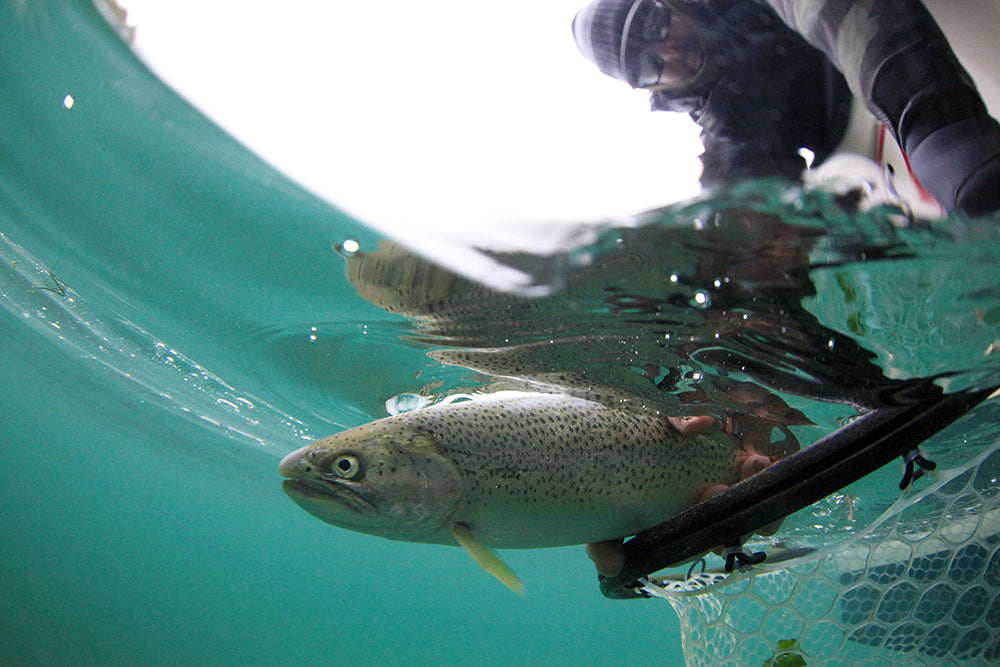
This is the beginning of some fo the most exciting times on the beach we have all year, when anglers have the opportunity to experience nature at its best; baitballs being crashed under their rod tips by voracious SRC’s, assaulting flies both subsurface and on top.

Curious anglers can literally watch as these fry leave the freshwater of small tributaries and enter the salt for their first time and almost immediately be marauded by cruising trout.

They have arrived, I am pumped!

Written by: Dave McCoy

Stroft leaders and monofilament, oh yeah!

Tuesday, March 16th, 2010

logo_stroftonlanyard1
As someone who spends a lot of time fishing in extremely varied conditions and locations locally and internationally, I constantly look for new or better ways to accomplish my efforts. Leader and tippet material are no different.

In the world of trout, it is easy to stay complacent with what works and works well but when you are hitting cold saltwater, spey casting to steelhead with large flies and heavy tips and then breaking out the 000wt for small native trout in mountain creeks, not every spool of clear line performs the same across the board.

Lately I have been hearing about this material from Germany called Stroft so I called Rajeff Sports, the US distributor and asked if I could sample a few sizes for our saltwater and steelhead. “No worries, be there tomorrow!” they said.

So the word on the street is this stuff is very small in diameter for its breaking strength, maintains some pretty amazing turn over qualities with larger flies and in the wind. I will say from the past few weeks that all of this is way true.

Fishing Puget Sound in heavy wind with baitfish flies is not always easy and larger diameter tippet is at times great. However, using 16lb test of Frog Hair is out of the question as the fly acts as if tied to a dogs tail, fish are dumb but not that dumb. 16lb Stroft is nearly the same diameter as 12lb Deep Blue, more rigid but not to the extent that you risk the same fall backs as flourocarbon, has elasticity and knots seat down well.

For steelhead, no brainer here. Smaller diameter means is will sink more uniformly with tips and heavy flies and with the higher breaking strength on smaller material, spooky fish are obviously less likely to spot it. Hanging on the bottom and when trying to break the fly, you will think your line is going to give before it does, it’s that strong.

All in all, no brainer for me this stuff is awesome. Give it a shot and if your local shop doesn’t have it yet, have them contact Rajeff Sports or your local Airflo rep.

Tighter Lines!

Written by: Dave McCoy

All Puget Sound rivers to close early, as expected

Saturday, February 13th, 2010

WDFW NEWS RELEASE
Washington Department of Fish and Wildlife
600 Capitol Way North, Olympia, WA 98501-1091

http://wdfw.wa.gov/

February 12, 2010
Contact: Bob Leland, (360) 902-2817

Steelhead fishing will close Feb. 18 in five river systems around Puget Sound

OLYMPIA – Steelhead fishing will close Feb. 18 in five major river systems in the Puget Sound area to protect wild fish, the Washington Department of Fish and Wildlife (WDFW) announced today.

The closure will affect the Puyallup, Nooksack, Stillaguamish, Samish and Snohomish rivers and their tributaries.

Pre-season estimates developed by the department indicate that returns of wild steelhead will fall far short of target levels in all five river systems, said Bob Leland, WDFW steelhead manager.

“This is the fourth straight year that we’ve seen a downward trend in wild steelhead returns,” Leland said. “These closures are necessary to meet the conservation objectives of our statewide steelhead management plan and comply with provisions of the federal Endangered Species Act (ESA).”

Wild steelhead in the Puget Sound region have been listed as “threatened” under the ESA since 2007. Although anglers are required to release any wild fish they catch in those rivers, some of those fish inevitably die from the experience, Leland said.

Rivers closing to steelhead fishing Feb. 18 include:

Puyallup River system

•Puyallup River mainstem from the 11th St. Bridge in Tacoma upstream to Electron Power Plant Outlet
•Carbon River from the mouth to Hwy.162 Bridge
•White (Stuck) River from the mouth to R Street Bridge in Auburn
Nooksack River system

•Nooksack River from the mouth to the confluence of the North and South Forks
•North Fork Nooksack from the mouth to Nooksack Falls
•South Fork Nooksack from the mouth to Skookum Creek
•Middle Fork Nooksack from the mouth to headwaters.
Samish River system

•Samish River from the mouth to the Hickson Bridge.
Stillaguamish River system

•Stillaguamish River from sloughs south of Marine Drive to forks.
•North Fork of the Stillaguamish from the mouth to Swede Heaven Bridge.
•South Fork of the Stillaguamish from the mouth to the Mt Loop Hwy. Bridge (above Granite Falls).
•Canyon Creek from the mouth at the South Fork of the Stillaguamish to the forks.
Snohomish River system

•Snohomish River from mouth (Burlington-Northern railroad bridges) to the confluence of the Skykomish and Snoqualmie rivers including all channels, sloughs, and interconnected waterways.
•Snoqualmie River from the mouth to the boat launch at Plum Landing (~1/4 mile below Tokul Creek).
•Skykomish River from the mouth to the forks.
•North Fork of the Skykomish from the mouth to Deer Falls (about ¼ mile upstream of Goblin Creek).
•South Fork of the Skykomish from the mouth to the Sunset Falls Fishway.
•Pilchuck River from mouth to the Snohomish city diversion dam.
•Sultan River from mouth to the diversion dam at river mile 9.7.
•Tolt River from mouth to the confluence of the North and South Fork.
•Raging River from the mouth to the Highway 18 Bridge.
The Wallace River, Tokul Creek and Snoqualmie River above the boat ramp at Plum Landing will close Feb 28.

Written by: emeraldw

Puget Sound, all season fishery, have we said that before?

Friday, January 15th, 2010

pugetsound_mikemillercastingfe1pugetsound_rickpicholacuttcls1The past couple of weeks, we have been focused on hitting the saltwater, more because it is nice to fish over fish rather than swing through what appears to be empty water much of the time. Last week, 4 trips and 6 anglers saw/hooked/moved/landed 27 fish. Not bad considering most believe this time of year to be a waste of time out there. Weather has been perfect for it too, overcast, rain and virtually no wind.

Some food for thought.

All of these fish were taken on floating lines. You don’t need an intermediate line to fish out here and this time of year a stripping basket only makes you look like a rookie at times.

Every fish was within 30 feet of us standing in ankle to knee deep water.

On the weekend, perfect days both days and not another angler was seen.

Written by: Dave McCoy

Sound is HOT Right Now!

Monday, September 21st, 2009

pugetsound_nancyhcuttinhandinwtrcrpdcrpd1Besides the salmon being around and captivating the interest of nearly all fly anglers right now, cutts are out in force asking for respect.  Currently one of my favorite methods for tempting them is to grease a baitfish pattern up with Aquel (environmentally safe floatant) and fish it more like a crease fly, just enough surface break to leave a subtle V-wake and they just trounce it.  Give it a shot, beaches are nearly vacant right now excet where pinks and coho are found and even some of those are too.

Written by: Dave McCoy