
First “Hatch of the Year in Puget Sound

March 21st, 2010

pugetsound_salmonfryclscrpd1

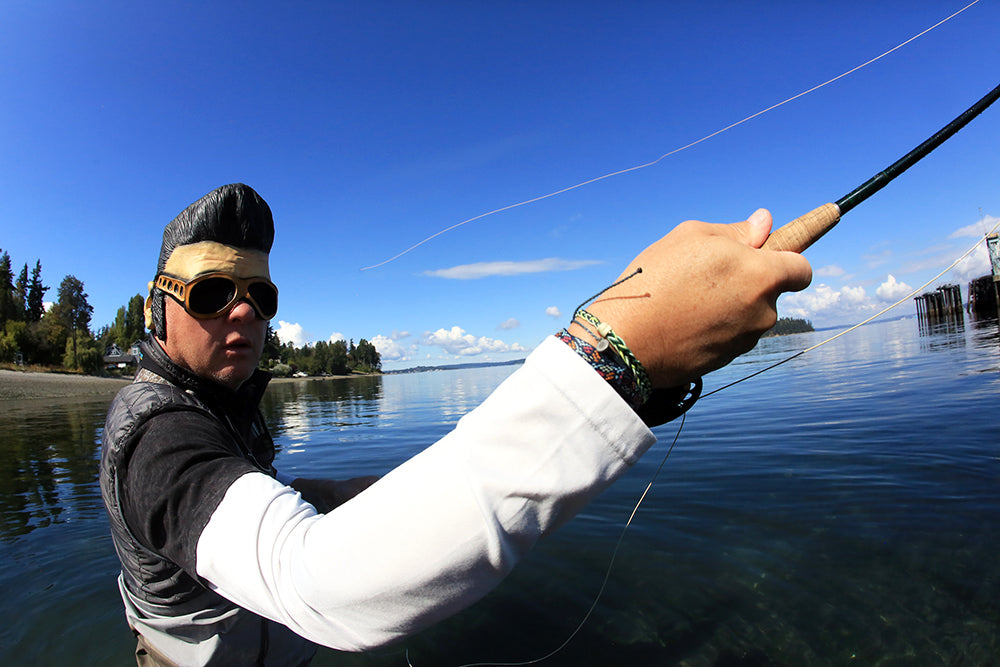
Hatches as most people consider them don’t really occur in the the local saltwater of Puget Sound but for those of us dedicated to this fishery, the arrival of the first salmon fry on the beach is akin to the arrival of the first BWO or Caddis of the season on a river.

When these baby anadromous fish hit the beach it marks the time when Sea Run Cutthroat should be revisiting the Sound as well, back from a winter and early spring in the rivers and streams.

This is the beginning of some fo the most exciting times on the beach we have all year, when anglers have the opportunity to experience nature at its best; baitballs being crashed under their rod tips by voracious SRC’s, assaulting flies both subsurface and on top.

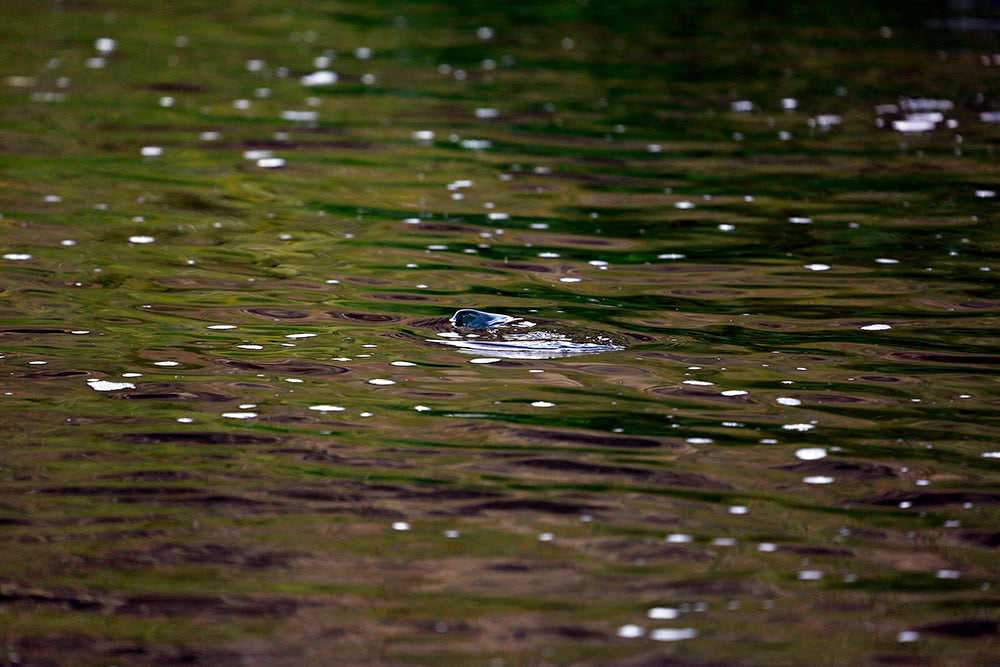
Curious anglers can literally watch as these fry leave the freshwater of small tributaries and enter the salt for their first time and almost immediately be marauded by cruising trout.

They have arrived, I am pumped!

Written by: Dave McCoy

I Like Big Bugs

March 17th, 2010

There is something about skwala stoneflies that just plain gets me excited! Maybe its because in a few select Western streams they signify the first great dry fly fishing of the season.  Or maybe its because they are big, wiggly, fun to tie and a blast to fish.  Either way they are one of my favorite aquatic insects to imitate with a fly.  Did I mention they drive fish bonkers?  Chubby Skwala

I am always on the lookout for new tying materials and fly patterns to imitate the little buggers.  Sure an olive stimulator or pat’s rubber legs will catch fish but where is the art in that?  Incidentally I was pleasantly surprised when a copy of the 2010 Hareline catalog arrived at work along with a sweet goody bag full of product samples.

Skwala Crawler

I dove into the bag and pulled out a handful of skwala madness.  It was like they read my mind and created a palette of buggy tying materials just for me to play with…

After wrapping up a couple morsels I headed over to the Yakima to get an expert opinion…

The experts approved…

Yakima Rainbow

If you love skwalas as much as I do the Yakima is the best show in town, and its on right now… Its time for some serious skwala fishing!!

Written by: Charlie Robinton

Stroft leaders and monofilament, oh yeah!

March 16th, 2010

logo_stroftonlanyard1
As someone who spends a lot of time fishing in extremely varied conditions and locations locally and internationally, I constantly look for new or better ways to accomplish my efforts. Leader and tippet material are no different.

In the world of trout, it is easy to stay complacent with what works and works well but when you are hitting cold saltwater, spey casting to steelhead with large flies and heavy tips and then breaking out the 000wt for small native trout in mountain creeks, not every spool of clear line performs the same across the board.

Lately I have been hearing about this material from Germany called Stroft so I called Rajeff Sports, the US distributor and asked if I could sample a few sizes for our saltwater and steelhead. “No worries, be there tomorrow!” they said.

So the word on the street is this stuff is very small in diameter for its breaking strength, maintains some pretty amazing turn over qualities with larger flies and in the wind. I will say from the past few weeks that all of this is way true.

Fishing Puget Sound in heavy wind with baitfish flies is not always easy and larger diameter tippet is at times great. However, using 16lb test of Frog Hair is out of the question as the fly acts as if tied to a dogs tail, fish are dumb but not that dumb. 16lb Stroft is nearly the same diameter as 12lb Deep Blue, more rigid but not to the extent that you risk the same fall backs as flourocarbon, has elasticity and knots seat down well.

For steelhead, no brainer here. Smaller diameter means is will sink more uniformly with tips and heavy flies and with the higher breaking strength on smaller material, spooky fish are obviously less likely to spot it. Hanging on the bottom and when trying to break the fly, you will think your line is going to give before it does, it’s that strong.

All in all, no brainer for me this stuff is awesome. Give it a shot and if your local shop doesn’t have it yet, have them contact Rajeff Sports or your local Airflo rep.

Tighter Lines!

Written by: Dave McCoy

Upper Yakima…

March 1st, 2010

DSC_0995

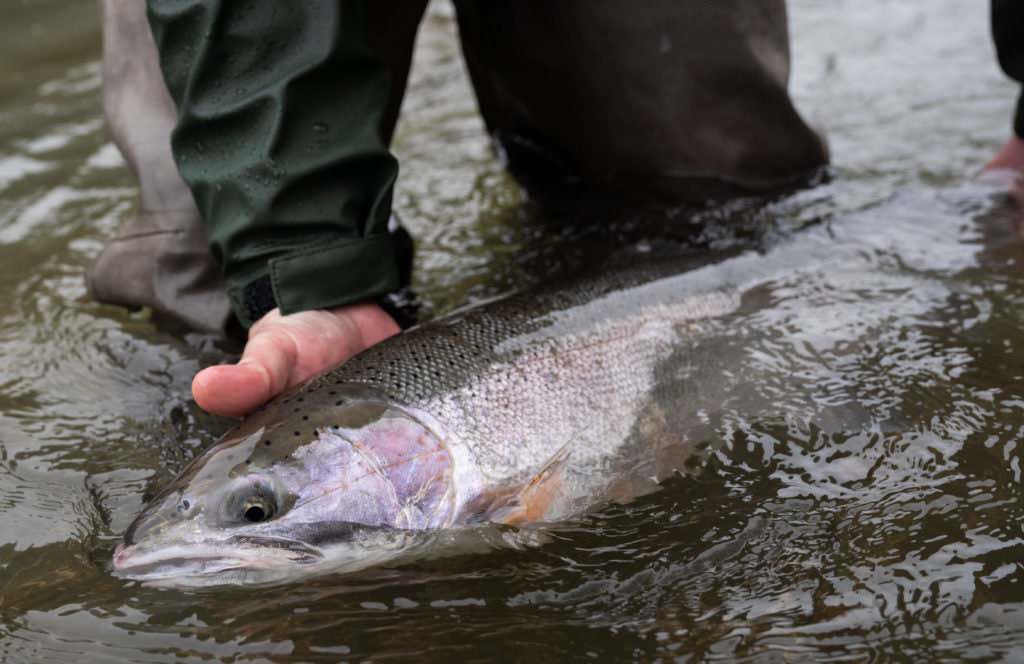
If you’re looking for some fish to take your mind off of the pitiful state of the Puget Sound Steelhead for an afternoon, might we suggest the Upper Yakima?  In a 6 cast stretch on one hole Ted landed a 14+ inch native cuttie, 2 other fish of the same size cruised by, and I landed this 24+ rainbow.  There’s plenty of bugs coming off, and when the water ticks up a few degrees it’s going to be game on.  And while these fish definitely won’t make you forget about the early closing of the Puget Sound Steelhead rivers again, this one proved that a rod bending and reel peeling fight doesn’t have to wait till fall.

Written by: Alex Collier

Sometimes, all you get is a blowfish…

March 1st, 2010

hawaii_dougblowfishonvrtbst1
First trip of 2010 to Hawaii and what a doozie. First, weather was all over the place, super high winds one day to absolute glass the next, rain in between and intermittent clouds and sun. For Hawaii, a real pain in the butt sometimes.

However, on other fronts, while there to finish up some photos for an upcoming article, I did get to actually fish without remorse, meaning my family was not along, so I could FOCUS!

While I snapped off a few fish and had a handful of refusals, I also had simply put, a life changing experience in the world of bonefish. There will always be questions regarding what I am about to say. We didn’t land it or even get a good shot at it but this bonefish we saw was pushing well into the mid to high 40 inch range. First spotting it, I was convinced in the mottled water that is was multiple fish shadowing each other.

To my surprise and utter speachlessness, it was a single fish and at 40 feet, I have to imagine this fish was mid 20 pounds as every other fish we saw for the next couple days were mere dwarfs to this monstrocity and many of them were over 10 pounds. This fish was every bit of twice plus some of those 10+ pounders.

I am forever a different angler on the flats knowing bones that big really do exist and knowing I may never see one of that stature again in my life.

As we watched it elegantly slither away some 150 yards, he/she finally lost our sights when the sun disappeared behind a cloud, temporarily blanketing the water with an impenetrable glare.

The 3 of us Coach, Doug and myself sat and all we could come up with is, well, we did get that blowfish…

Written by: Dave McCoy

All Puget Sound rivers to close early, as expected

February 13th, 2010

WDFW NEWS RELEASE
Washington Department of Fish and Wildlife
600 Capitol Way North, Olympia, WA 98501-1091
http://wdfw.wa.gov/

February 12, 2010
Contact: Bob Leland, (360) 902-2817

Steelhead fishing will close Feb. 18 in five river systems around Puget Sound

OLYMPIA – Steelhead fishing will close Feb. 18 in five major river systems in the Puget Sound area to protect wild fish, the Washington Department of Fish and Wildlife (WDFW) announced today.

The closure will affect the Puyallup, Nooksack, Stillaguamish, Samish and Snohomish rivers and their tributaries.

Pre-season estimates developed by the department indicate that returns of wild steelhead will fall far short of target levels in all five river systems, said Bob Leland, WDFW steelhead manager.

“This is the fourth straight year that we’ve seen a downward trend in wild steelhead returns,” Leland said. “These closures are necessary to meet the conservation objectives of our statewide steelhead management plan and comply with provisions of the federal Endangered Species Act (ESA).”

Wild steelhead in the Puget Sound region have been listed as “threatened” under the ESA since 2007. Although anglers are required to release any wild fish they catch in those rivers, some of those fish inevitably die from the experience, Leland said.

Rivers closing to steelhead fishing Feb. 18 include:

Puyallup River system

•Puyallup River mainstem from the 11th St. Bridge in Tacoma upstream to Electron Power Plant Outlet
•Carbon River from the mouth to Hwy.162 Bridge
•White (Stuck) River from the mouth to R Street Bridge in Auburn
Nooksack River system

•Nooksack River from the mouth to the confluence of the North and South Forks
•North Fork Nooksack from the mouth to Nooksack Falls
•South Fork Nooksack from the mouth to Skookum Creek
•Middle Fork Nooksack from the mouth to headwaters.
Samish River system

•Samish River from the mouth to the Hickson Bridge.
Stillaguamish River system

•Stillaguamish River from sloughs south of Marine Drive to forks.
•North Fork of the Stillaguamish from the mouth to Swede Heaven Bridge.
•South Fork of the Stillaguamish from the mouth to the Mt Loop Hwy. Bridge (above Granite Falls).
•Canyon Creek from the mouth at the South Fork of the Stillaguamish to the forks.
Snohomish River system

•Snohomish River from mouth (Burlington-Northern railroad bridges) to the confluence of the Skykomish and Snoqualmie rivers including all channels, sloughs, and interconnected waterways.
•Snoqualmie River from the mouth to the boat launch at Plum Landing (~1/4 mile below Tokul Creek).
•Skykomish River from the mouth to the forks.
•North Fork of the Skykomish from the mouth to Deer Falls (about ¼ mile upstream of Goblin Creek).
•South Fork of the Skykomish from the mouth to the Sunset Falls Fishway.
•Pilchuck River from mouth to the Snohomish city diversion dam.
•Sultan River from mouth to the diversion dam at river mile 9.7.
•Tolt River from mouth to the confluence of the North and South Fork.
•Raging River from the mouth to the Highway 18 Bridge.
The Wallace River, Tokul Creek and Snoqualmie River above the boat ramp at Plum Landing will close Feb 28.

Written by: emeraldw

Washington Steelhead, IGFA and Joan Wulff

February 8th, 2010

Tell me that the most recent issue of Fly Rod and Reel hasn’t printed what I am sitting here reading, oh my GOD! After such a stellar issue last month, dedicated to steelhead, FR&R just took about 5 steps backwards and took Joan Wulff with them.

In this industry it is easier and unfortunately safer to steer clear of hot topics, leaving them open to debate amongst many who are seeking guidance on these issues from those they trust and respect. I would wager thousands of anglers are looking for someone to be an authority on the topic and yet has anyone besides a handful of conservation organizations in the region been willing to step up to that plate? No for fear it might, “offend and turn off prospective customers or existing ones…” author will remain anonymous and clearly a glass half empty type of personality.

Rather it should maybe be viewed as if you are passionate enough to stake your reputation on the well being of a species that doesn’t speak English or any other language to my knowledge, for the betterment of society and those who rely on them for their livelihood, maybe you will attract like minded clients/customers and turn existing ones into life-long believers with you.

Unless you live here in the Pacific NW, have had your life affected by these magnificent fish and what they endure to become a part of that said life, then you don’t have a right to say, endorse or have anything to with the future of these species. Nothing!

Why does Joan feel the need to associate herrself with this unfortunate story? For her to introduce such an article shows the uninformed and removed state of those who do not live and breathe the plight of these fish day in and day out as a part of working in this industry and more importantly in this region.

In fact it is quite cavalier for her act this way while at the same time have this in every FFF Flyfisher magazine:
magcover_joanwulfffff1

Can you be anymore hypocritical…this is not what these fish or this industry needs. We need well respected and world renowned anglers and conservationists to positively politicize acts like this for the benefit of the fish.

While on the subject, why does the IGFA have, allow or even accept applications for species in peril? World Record status of steelhead and other species around the world that are in serious trouble with regards to their long term sustainability should simply be put on hold or closed to change until they have regained at least a portion of their former populations.

As an organization that is supposed to represent our industry they too should have a higher standard and conscientious view of what it means to remove such a species from the gene pool.

The mention that this was the largest steelhead ever caught by IGFA records also shows a gross negligence in making sure they have compiled what is out there on record so as to give a more competent detail of their history.

Hey, IGFA, I did some of your work for you:

Idaho State Record
http://fishandgame.idaho.gov/fish/steelhead/

New York State Record
http://www.outdoorsniagara.com/new_york_state_record_steelhead.htm

British Columbia Records, scroll down to Area Records
http://www.noelgyger.ca/

bc_33poundsteelheadkispiox
RELEASED!

skeena_recordsteelhead1
RELEASED!!

I feel sorry for someone who needs to have their namesake based on the killing of such a magnificent fish. Especially when looking to the not so distant future could find that is was also the beginning of the end of their race. Hind sight being 20/20, that might have been a good question to ask yourself before giving it the granite helmet huh Pete.

I would hope that when I die, my kids and with luck grandkids will look at what I believed in and fought for and be proud, knowing I was attempting to allow them the same pursuits I enjoyed growing up.

NONE of us out here believe the “it was bleeding” story. I have not seen one picture supporting this claim to be true and by the undertones in Pete’s article, he knew exactly what he was doing, where is the closest certified scale IGFA will accept that I can find…absolutely deplorable.

And as for Joan Wulff, make up your mind. Do you “Hold the future in your hands, and then release them” or do you kill them and grab the worthless little bit of history and run? What sort of lesson does this teach our up and coming generation of anglers? I am sorry to say I lost much of the respect and admiration I had for you.

As for FR&R, by simply printing the story without a side bar of comment by the magazine, you have endorsed this. A publication of this stature should be first in line to “police” such a story by putting the right spin on it. Only hope is to have it create enough awareness to help alter the policy here in WA but I wouldn’t hold my breath.

WDFW shoulders a good portion of the blame for this as well. Several years ago they took a step in the right direction by making ALL wild steelhead in Washington mandatory catch and release. Pressure from a small town called Forks made the entire fisheries management board back off this decision, allowing 1 wild steelhead be kept and we have been in a back peddling tailspin since. Their disparaging numbers currently compared to historical figures should easily warrant such a decision.

I LOVE this industry. I have dedicated 20 years of my life to it and to helping others marvel at its wonders and will continue to do so. But at times I am floored by the selfish nepotism abound in certain circles of our industry and it is time to grow up.

I will end this on these words:

“We have reached the time in the life of the planet, and humanity’s demand upon it, when every fisherman will have to be a river-keeper, a steward of marine shallows, a watchman on the high seas. We are beyond having to put back what we have taken out. We must put back more than we take out.”
The Longest Silence – Thomas McGuane

Was this too harsh? Tough, it needed to be said and thank you Dylan for pulling on the reigns.

Written by: emeraldw

Target Stores Drop Farmed Salmon

February 8th, 2010

Target stores to sell Alaska salmon, drop farmed productFRESH: Chain removes all farmed fish from stores in an “environment-friendly” plan.

By The Associated Press

MINNEAPOLIS — Target Corp., the nation’s second-largest discounter after Wal-Mart Stores Inc., said Tuesday that it pulled all farmed salmon from its stores as it looks to be more environmentally conscious.

The retailer said it will no longer carry farmed salmon in its fresh, frozen
or smoked seafood sections. The move impacts national brands and the chain’s own Archer Farms and Market Pantry brands, which will now use wild-caught Alaska salmon.

Target — which has two stores in Anchorage and one in Wasilla — said sushi carried in its stores that currently use farm-raised salmon will switch to wild-caught salmon by year’s end.

“Target strives to be a responsible steward of the environment, while also providing our guests with the highest-quality food choices,” Greg Duppler, senior vice president of merchandising, said in a statement.

Companies have increasingly shifted away from farmed salmon due to pressure by consumers and environmentalists, who want wild-caught salmon used because it can help preserve salmon levels as well as species health and doesn’t hurt local habitats.

Salmon farms are viewed by these parties as hazardous due to the pollutants and chemicals they can emit as well as the potential dangers of farmed fish escaping and intruding on native salmon.

Target’s salmon transition comes in the midst of its $1 billion store
renovation project. The company will introduce a new store format starting in April that features spruced up home furnishing offerings, larger grocery sections, better video game displays and shelf lighting in the beauty section. The move, which impacts 340 U.S. stores, is aimed at increasing sales and profit and grabbing market share from rivals.

The retailer has 1,744 stores in 49 states.

Written by: Dave McCoy

Not just 1 dead wild steelhead!!!

January 28th, 2010

Here in the wonderful state of Washington, we are still allowed to kill one wild steelhead a year. I am not sure the notion of killing one female with her nearly ready to release eggs is taken into consideration as this angler just killed more than one. hoh_steelheadeggsonground1
Here lays the future of a species that are about to go away forever and yet policy around the region is allowing for the killing of not just one fish, but as you can see here, potentially hundreds.

Things have to change. Today my dad encouraged me to be reasonable and factual with regards to my reaction to such sights and future articles regarding steelhead because reason is irrefutable and people will listen to it.

I couldn’t agree more and yet I simply can’t control my feelings when I see the residuals of a wild steelhead killed and its hopeful offspring left to help the grass grow. Tell this to a politician who has been reasonable about any other controversial issue. Seems to me it is just that much easier to muffle the sound of reason when that reason isn’t blasted from the rooftops, even when irrefutable.

This just isn’t making sense and yet so many out there, outside of our region are left to think these fish are just as abundant as they once were. It couldn’t be that bad, look at everyone who is guiding for them and how many they catch. What isn’t visible to those outside of the PNW or whom just simply aren’t involved with fish conservation at all is the tooth and nail fight that is being waged over a species of fish that is in many parts of the PNW, an ESA (Endangered Species Act) listed species, yes, the very same list the bald eagle was on.

These fish won’t recover if this matter or listing status isn’t taken seriously. Dylan Tomine has said there is encouraging work being done in certain places and while I agree, it doesn’t help the over all awareness of the fish. If an angler perceives the population of steelhead to be great on the Deschutes, then why wouldn’t the rest of the regions fish be in just as good of shape? This is the daily battle we have when speaking with clients who want to go steelhead fishing.

Yes, each fishery is unique and will require a unique set of management policies to save/recover/help/whatever the steelhead in that watershed. But if the word doesn’t not get out about the over all state of the fish, especially in Washington, we will all be looking for a new place to swing our flies.

Written by: Dave McCoy

About CCA, Everyone in PNW Should Read This

January 24th, 2010

Bill Monroe: Does CCA’s bet in gill-net gamble indicate its hand was forced?

By Bill Monroe, Special to The Oregonian January 23, 2010, 10:00AM

Benjamin Brink/The Oregonian Spring salmon are the Columbia River’s most prized — and controversial — catch. Jim Wells (left) and Brian Tarabochia pull the gill net out early on a cold morning on the Columbia. Like a methodical poker player suddenly switching to “all-in,” the region’s largest and potentially most influential player in sport salmon fishing is shoving all its chips forward in the gill-net gamble.

But is it by choice?

The Coastal Conservation Association of Oregon has launched a ballot
initiative drive to rid the lower Columbia River and tributaries of gill-net
fishing for salmon, steelhead and sturgeon.

This, after the association and others failed to talk the 2009 Oregon
Legislature into mandating gradual shifts in salmon harvest away from
gill-nets.

Even after that failure, the association’s one-step-at-a-time strategy
appeared intact through summer and early fall as players began positioning for another run at the 2011 Legislature.

… until the ballot surprise, unveiled around Christmas.

CCA Oregon’s initiative, if passed in November, will ban all non-tribal
gill-netting for salmon, steelhead and sturgeon statewide, i.e., on the
Oregon side of the Columbia River and tributaries, including currently
netted off-channel Select Area Fisheries Enhancement (SAFE) areas. It calls for an effective date of Jan. 1, 2011.

The Oregon Department of Fish and Wildlife would have to use most of all of the angling surcharge fee increases to help the gill-net fleet transition into more selective harvest methods such as set nets and seines that don’t kill fish.

Dave Schamp of Hillsboro, chairman of CCA Oregon, suggested the decision was inevitable after CCA learned of a separate, well-financed effort poised to launch a similar ballot initiative.

CCA was cornered. Its rise in popularity, after all (more than 10,000
members in a few years), was based in large part on the presumption the association would do just what the ballot initiative proposes — end
non-tribal gill-netting.

Schamp acknowledged the association’s more methodical approach had already raised eyebrows within the membership.

“They wondered what the heck we were doing,” he said. The “what,” Schamp said, was a shift in the CCA’s emphasis from allocation to conservation. “We don’t have anything against commercial fishing,” he said. “What we’ve wanted all along is harvest reform.”

So was CCA Oregon caught between a rock and a hard place, forced to act prematurely?

“One could draw that conclusion,” Schamp said. “But we also didn’t want the wrong petition out there; we wanted something with a high degree of success and we wanted to do it for the fish.”

Forced or not, Schamp said CCA Oregon is confident of the initiative’s
passage, citing extensive polling before the December launch. “It showed overwhelming support by a broad spectrum of voters for the end of gill-netting,” he said.

The gill-net community is understandably prepared for a difficult battle.

Jim Markee, a Salem lobbyist representing the commercial fleet, said current statutes allow only gill-nets in the Columbia, not the kind of commercial fishing gear the initiative demands. That, he said, will effectively ban commercial fishing, leaving all returning salmon to sport anglers — a message he will try to convey to voters.

CCA collected 5,000 signatures (2,000 were required) within days, Schamp said, to get a ballot title from the state attorney general. The comment period on the proposed title ends Monday. Chief petitioners are Schamp, Senator Fred Girod, R-Stayton, and Representative Rod Monroe, D-Portland (no, we’re not related).

Its status can be viewed online by going to www.sos.state.or.us/elections/. On the top bar, go to “Elections,” then scroll down and click on “Initiative, Referendum and Referral Log.” On the form that appears, change the election year to 2010 and enter Schamp’s name (or Girod or Monroe) as the chief petitioner.

Without being specific, Schamp said CCA Oregon will comment on changes it wants in the proposed ballot title. Review by the attorney general’s office will probably delay publication of a ballot title well beyond the Pacific Northwest Sportsmen’s Show on Feb. 10-14, Schamp said.

Markee said he will also submit challenges to the attorney general’s office before Monday’s deadline.

The secretary of state will require 82,769 signatures to get the initiative to the polls in November, but Schamp said the target will be at least 150,000. “We won’t have any trouble at all getting way more than we need,” Schamp said.

More problematic are the potential risks:

– If the initiative fails at the polls, so will all or most of the impetus
for harvest reform at the legislative level — perhaps for years or even
decades to come.

The initiative could drive a wedge in the Columbia River Compact, with
different commercial fishing rules on the Washington and Oregon sides of the lower Columbia.

– A vastly lower or zero incidental mortality on wild salmon for commercial fishing could mean a major increase in the commercial take of hatchery salmon and, thus, lower numbers for sport fishing. That’s contrary to the reason many CCA members signed up in the first place. Tribal gill-netters above Bonneville Dam might also face increased scrutiny of their take of wild salmon and steelhead.

– Commercial gill-netting is already tightly controlled and, state managers say, is not exceeding its allowable incidental kill of salmon and steelhead listed as threatened or endangered.

– The state Department of Fish and Wildlife would have to re-allocate
angling fee surcharges from the popular restoration and enhancement program to re-tool the commercial fleet.

Schamp acknowledged each potential pitfall but declined to debate or
elaborate. Instead, he repeatedly fell back on the conservation mantra.

“People have a lot of fear of the unknown. Our focus is on doing what’s
right for the fish,” he said. “Putting the allocation issues aside, the goal
is to eliminate a method of harvest that is not selective.”

Markee, however, said federal protection of endangered salmon and steelhead will still allow the same number of incidental mortalities whether they’re taken by commercial or sport fleets.

“This is not about conservation,” he said. “Those fish are still going to be killed by somebody.”

Written by: Dave McCoy